

What is the action plan for sustainable finance and what is its objective
The action program includes 17 goals for sustainable development to be satisfied in the environmental, economic, social and institutional fields by 2030. To achieve this goal, the EU Commission has estimated annual investments of approximately 520 billion euros, so it is necessary to mobilize private resources as well as public ones. Also for this reason, the need for greater sustainability in the way of doing business is increasingly clear, hence the idea of 'sustainable financing'.
Sustainable finance: the mission
The mission is to ensure that every company, bank, insurance company or individual investor can pursue their financial interests without sacrificing the well-being of the planet and society, thanks to the construction of sustainable investment portfolios. This would allow funding to be directed to projects that certify positive impacts at an environmental and social level, so as to speed up and support sustainable development.
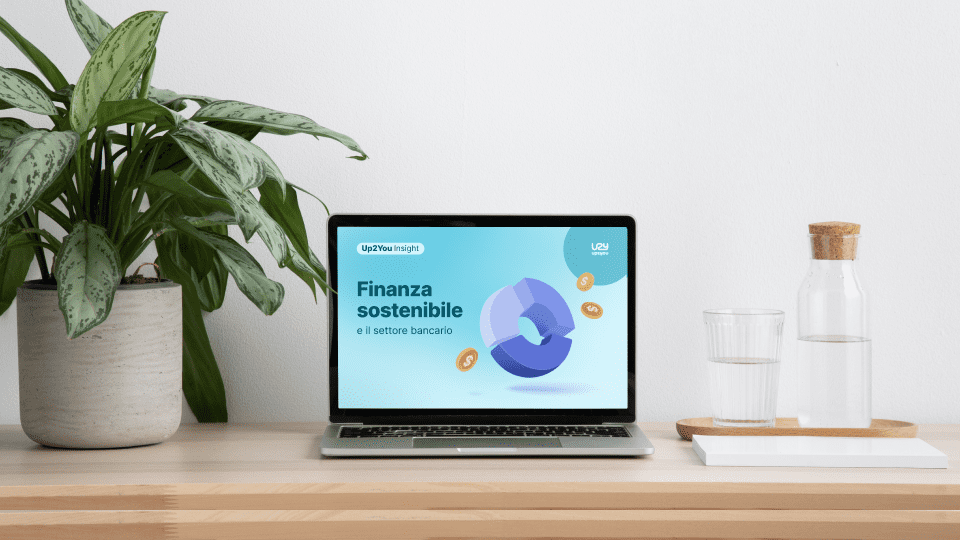
Precisely to help you understand how to pursue your financial interests without harming the planet, the team of Up2You has created a guide for Summarize EU regulations promote sustainable finance and clarify how banks and other financial institutions play a fundamental role in this transition, so as to be able to take part in the change already taking place.

Sustainable finance: what are the incentives
In the latest annual reports on market risks and vulnerabilities prepared by the main financial analysis authorities such as Fed and ESMA, the climate change It has emerged as central element. In 2019, the European Commission also committed itself to a new development strategy called Green Deal, with the intention of Making Europe the first continent with zero net emissions. To achieve this goal, it has adopted three important incentives for sustainable finance:
- Taxonomy;
- Sustainable Finance Disclosure Regulation - SFDR;
- Corporate Reporting of Sustainability - CSRD.
These directives operate on the duties that individual companies and financial operators are required to carry out to make the market transparent, increasing the quantity, quality and comparability of information, through a clear and shared classification system.
These 3 directives are specifically addressed in our comprehensive guide on sustainable finance, in which we delve into the objectives of the directives, who they are aimed at and what is required of companies. You can download it free by clicking on the button below.
<button>Download the free white paper <button>
Sustainable finance: the proposal of the European Parliament
In summary, the transition that the European Union is striving for is to evaluate companies not only on the basis of their economic-financial performance, but also of sustainability through a shared classification system.
On the other hand, the action plan planned for European objectives in the future will not concern communication alone, but will increasingly include the analysis of the concrete actions of individual companies.
A clear example of this is the proposal within the European Parliament on”due diligence” for sustainability that is moving towards approval, relating not only to informational obligations, but also to management.
What does the proposal entail?
The draft law prohibits the conclusion of contractual relationships with suppliers who do not comply with sustainability parameters expressed by the same. Therefore, if business models influence and are influenced by policies that are increasingly oriented to sustainability and to the reporting of their implementation, it is important to keep up with these changes. In what way?
- As individual investors, it is essential to direct your investments to realities that prove to be efficient and up to date on ESG commitments, to avoid exposing yourself to future risks.
- As entrepreneurs, immediately draw up a future plan of action that is in step with the regulations in force and provides for the definition of attainable objectives. The first step in this direction is to carefully define safe and recognized methodologies for drafting the company's sustainability report.
- As financial companies, understand their role in the current transition and act early to take full advantage of the possibilities of a concrete commitment to sustainable development.
Environmental sustainability: the fundamental role of the banking sector
As already stated, there are two trends that today's market must face:
- the increasingly tangible effects of climate change on the financial system;
- an acceleration of transition of national and international policies in favor of better sustainability performance.
In both cases, banking institutions play a central role: both of responsibility to the global community in promoting and accelerating the transition, and in exploiting the possibilities offered by the new regulations.
What financial institutions must take into account is that current sustainability standards are not going to disappear, but, on the contrary, they will become increasingly stringent. Achieving these objectives in the shortest possible time and anticipating trends, not only represents a competitive advantage, but the correct way to act as protagonists against the advance of the climate crisis.
But how can this desire be translated into practice?
Banks and climate change: building a sustainable investment portfolio
The best strategy for a banking institution to deal responsibly with the issue of climate change is to Calculate the emissions of your investment portfolio, or the amount of CO2 released from all the activities in which it was decided to invest. In these cases, in technical terms we refer to Calculation of Purpose 3. This allows for more advantages:
- evaluate the financial risk associated with the companies in which the individual institution invests, ensuring that they are consistent with the different standards. In this way, they will not be subject to future regulatory obligations and will not have to face additional costs to reduce their emissions;
- be able to define improvement objectives, thus building an increasingly performing and secure portfolio over time;
- demonstrate their commitment to the transition to a low-carbon economy, so as to increase the confidence of customers, investors and the public, facilitating the construction of a solid and sustainable reputation.