

What are CAMs for the construction sector
I CAM (Minimum Environmental Criteria) are the environmental sustainability requirements defined by Ministry of Environment and Energy Security (MASE), conceived as a fundamental pillar for promoting sustainability in public contracts.
In theConstruction sector, CAM Construction represents a group of mandatory standards What should they be strictly respected at all stages management of a public building: from design and construction to renovation and ordinary and extraordinary maintenance. Their main purpose is mitigate environmental impact of a sector that, historically, is among the most responsible for CO2 emissions2and resource consumption at a global level.
Although originally introduced in 2007, their centrality has been definitively sanctioned by new Public Contracts Code (Legislative Decree 36/2023), which requires its systematic application in all categories of contracts. For companies in the supply chain, this translates into a profound operational transformation: this is no longer just regulatory compliance, but a strategic opportunity to promote ecological transition.
For any company that produces materials, components or solutions for the construction industry, demonstrate the compliance with CAM Construction requirements It is today the essential access requirement for collaborate with the Public Administration.
It is important to clarify that, although in the sector we often talk colloquially about 'CAM certification', it is actually a process of verifying the compliance of products and processes with specific technical parameters. Being ready to meet these criteria does not only mean responding to a legal obligation, but position yourself as an excellent partner in a market increasingly oriented to sustainability and transparency.
What are the objectives for CAMs in the construction sector
The adoption of CAM Construction 2025 is not only a bureaucratic requirement, but a strategic choice aimed at transforming public and private construction into a 'milestone' of the ecological transition.
The objectives set by the new decree aim at a drastic reduction of the environmental footprint along the entire life cycle of the works, harmonizing Italian practices with the new European Construction Products Regulation (CPR) And with the principle DNSH (Do No Significant Harm), or the commitment to “not cause significant harm” to the environment.
This integrated approach translates into a series of fundamental goals that the sector must achieve, let's see what they are.
- Decarbonization and reduction of climate impact: the primary objective remains the net reduction in greenhouse gas emissions and the consumption of natural resources, directly counteracting the role of construction as one of the most energy intensive and polluting sectors.
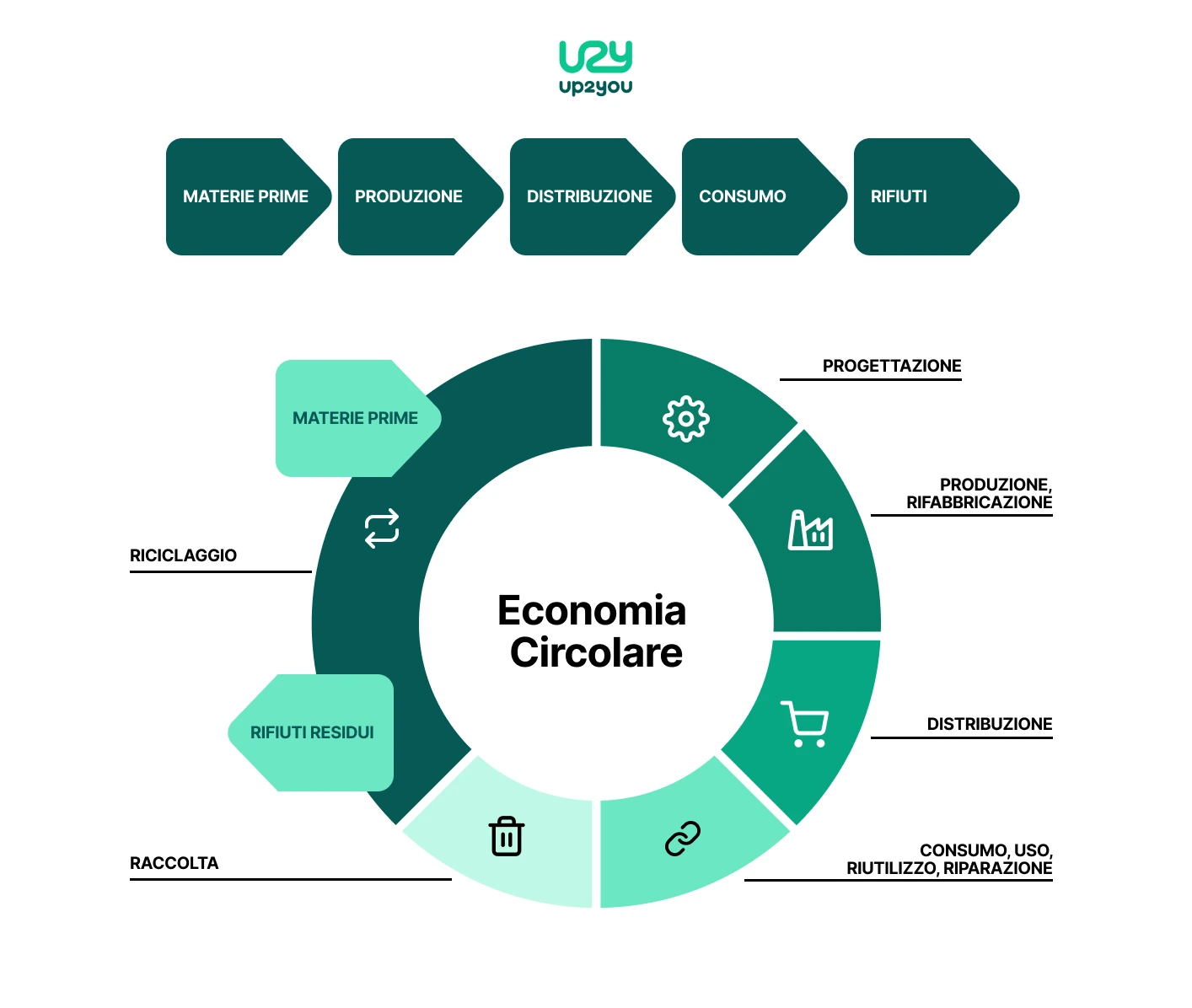
- Consolidation of Circular Economy: the criteria push towards regenerative production and disposal models, concretely encouraging the recovery, recycling and reuse of building materials to minimize the production of construction waste.
- Maximizing energy efficiency: Improving building performance does not only mean consuming less, but designing structures capable of optimizing thermal and electrical resources in an intelligent way.
- Sustainability and traceability of materials: the obligation to use renewable, biological materials (such as wood) or with high recycled percentages is introduced. Traceability becomes central, rewarding products accompanied by recognized environmental certifications.
- Indoor Air Quality (IAQ) Excellence: The new decree pays unprecedented attention to indoor well-being, especially in sensitive places such as schools and hospitals, through strict controls on VOC (volatile organic compounds) emissions, mechanical ventilation and acoustic comfort.
- Sustainable construction site management: attention extends to the impact of the works being carried out, requiring more efficient waste management and the use of machinery with low environmental impact.
- Transparency, Innovation and Certifications: CAMs promote a transparent supply chain that encourages the adoption of advanced international protocols such as LEED, BREEAM or ITACA, as well as specific certifications for installation (for example for windows).
What are the changes foreseen by the new CAM Construction Decree 2025
The Italian regulatory landscape marks a turning point with the publication in the Official Gazette, the December 3, 2025, of the new CAM Construction Decree. This evolution, which officially comes into force on February 2, 2026, is not a simple bureaucratic update, but a profound revision of Ministerial Decree 256/2022.
The objective is twofold: to align the sector with the new Procurement Code (Legislative Decree 36/2023) and harmonize national criteria with the European Construction Products Regulation (CPR).
The innovations introduced aim at eliminate interpretative ambiguities of the past, offering contracting agencies and companies a clearer and more operational structure.
Let's see what the pillars of the new decree are.
- The central role of the Designer and the LCA analysis: the design phase becomes the real engine of sustainability. The new decree encourages, through significant reward scores, the execution of life cycle analysis (LCA) and Life Cycle Costing (LCC). This approach makes it possible to evaluate the environmental impact and costs not only during the construction phase, but over the entire useful life of the building, following the international standards EN 15978 and EN 15804.
- Expansion of product categories: the section dedicated to construction products is enriched with new specific technical requirements, demonstrating an increasingly widespread control over each building component.
- Water Management and Resilience: new technical specifications are introduced dedicated to saving water, the reuse of rainwater and the design of interventions aimed at the rehabilitation of moisture degradation, crucial issues for adaptation to climate change.
- Integration with BIM (Building Information Modeling): to ensure transparency and traceability, the decree promotes the use of BIM methodology. This tool becomes essential for managing the flow of information related to materials and their environmental performance in a digital and verifiable way.
- Qualification of skills: it's not enough to 'do', you need to know how to demonstrate that you have the skills. The decree reinforces the requirements for designers and construction personnel, valuing the possession of accredited certifications, such as that of “CAM Expert”.
- Environmental Validation and Certifications: the obligation to validate environmental declarations by accredited bodies (UNI EN ISO 14021, 14024, 14025) is consolidated. In addition, the importance of EPD (Environmental Product Declarations) as fundamental inputs for building LCA studies.
- Reward mechanisms for international protocols: The recognition of additional scores for projects that adopt high-profile energy-environmental certification protocols, such as LEED, BREEAM or ITACA, remains central, confirming the desire to reward excellence that goes beyond the legal minimum.
This update transforms CAMs from a set of constraints to a real one operating manual for innovation. For companies, the integration of tools such as the LCA into the sustainability report will no longer be just an optional choice, but the main tool for justifying high-performance design choices and overcoming the challenges of the public and private markets.
Since when do the new CAMs for the construction sector apply
The Ministerial Decree of 24 November 2025 has drawn a clear timeline for the adoption of the new standards. The watershed date is set for February 2, 2026, or 60 days after the publication of the decree in the Official Gazette. From now on, the new Minimum Environmental Criteria become the mandatory reference for a wide range of procedures.
Specifically, the new provisions apply to:
- Design and construction management services: for all calls, notices of choice of contractor or invitations sent starting from February 2, 2026.
- Maintenance and work services: including integrated contracts (executive design and works) whose tender basis is a project validated according to the new decree.
- Internal design of the contracting agencies: the legislation also extends to projects developed internally that, although entrusted by a previous letter of assignment, are not yet validated on the date of entry into force.
To ensure the continuity of the procedures already in progress and not to block the construction sites started, the legislator has provided for a Transitional period. In some specific cases, the previous Ministerial Decree 256/2022 (amended by the decree of August 5, 2024) will continue to apply, in particular:
- For procedures with a tender base consisting of a Technical-Economic Feasibility Project (PFTE) validated under the validity of the old CAMs, provided that the announcement is published within 3 months from the validation of the PFTE.
- For jobs based on a executive project validated with the CAMs 2022/2024, provided that the announcement or notice is published within 3 months from the validation of the project itself.
This regulatory framework requires companies and professionals in the sector to careful monitoring of the project validation dates. Timely alignment with the deadlines of 2026 is not only an obligation, but a necessary step to ensure that your materials and services comply with the requirements required by the contracting authorities in the new market scenario.
What should companies do not comply with the new CAMs
The entry into force of the CAM Construction Decree 2025 leaves no room for ambiguity: environmental compliance becomes a essential access requirement. Companies that today do not meet the new standards are at a strategic crossroads.
The first option, the systematic waiver of public contracts, would result in the exclusion from an increasingly significant share of the market, including subcontracts and indirect supplies. The second option, highly recommended for those who want to remain competitive, is to undertake a structured adjustment path.
To bridge the regulatory gap and transform compliance into a competitive advantage, companies must move on three main fronts:
- Technical-productive analysis and adjustment: It is necessary to review the entire product catalog to verify compliance with the recycled or recovered material thresholds. This often requires the reorganization of production processes and the adoption of strict systems for the traceability of waste, certifiable through recognized brands or specific Declarations of Performance.
- Documentary adjustment and environmental certifications: Compliance must be demonstrable and validated by accredited bodies. Companies must be ready to provide solid data on life cycle analysis (LCA) and on the calculation of costs (LCC) of its products. In addition, it is essential to be able to draw up a detailed 'CAM Report' that demonstrates the consistency between supplies and the sustainability, traceability and recycling requirements imposed by the decree.
- Digitalization and training (BIM): The new decree pushes towards the adoption of Building Information Modeling (BIM) as a tool for integrating environmental data throughout the life cycle of the work. At the same time, investing in staff training is crucial: from the qualification of designers to the certification of installation skills, every link in the chain must be aware of the new responsibilities.