

What is 9001 certification
The ISO 9001 It is the international standard for Quality Management Systems (QMS) best known and most widespread in the world. It is a strategic framework designed to help organizations, of all sizes and sectors, to optimize your performance, ensuring that the products and services offered constantly meet customer expectations.
Adopting this standard means choosing management based on transparency, operational efficiency and continuous improvement, fundamental elements for obtaining a competitive advantage in an increasingly demanding market.
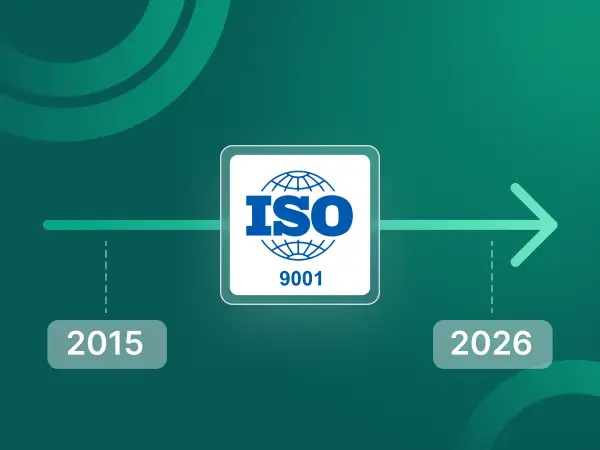
The standard is also constantly evolving. The publication of the new ISO 9001:2026 It is in fact planned for September 2026.
This date will mark the start of a transition phase, during which companies will have to prepare for a change of approach on the part of auditors, which will shift the focus from simple documentation to the concrete demonstration of how critical issues, such as climate risks and data integrity, are truly integrated into decision-making processes.
How does ISO 9001 certification work
The operation of ISO 9001 is based on a dynamic and cyclical method which allows the company to evaluate itself and constantly improve, transforming quality management from a simple bureaucratic requirement to a real efficiency motor.
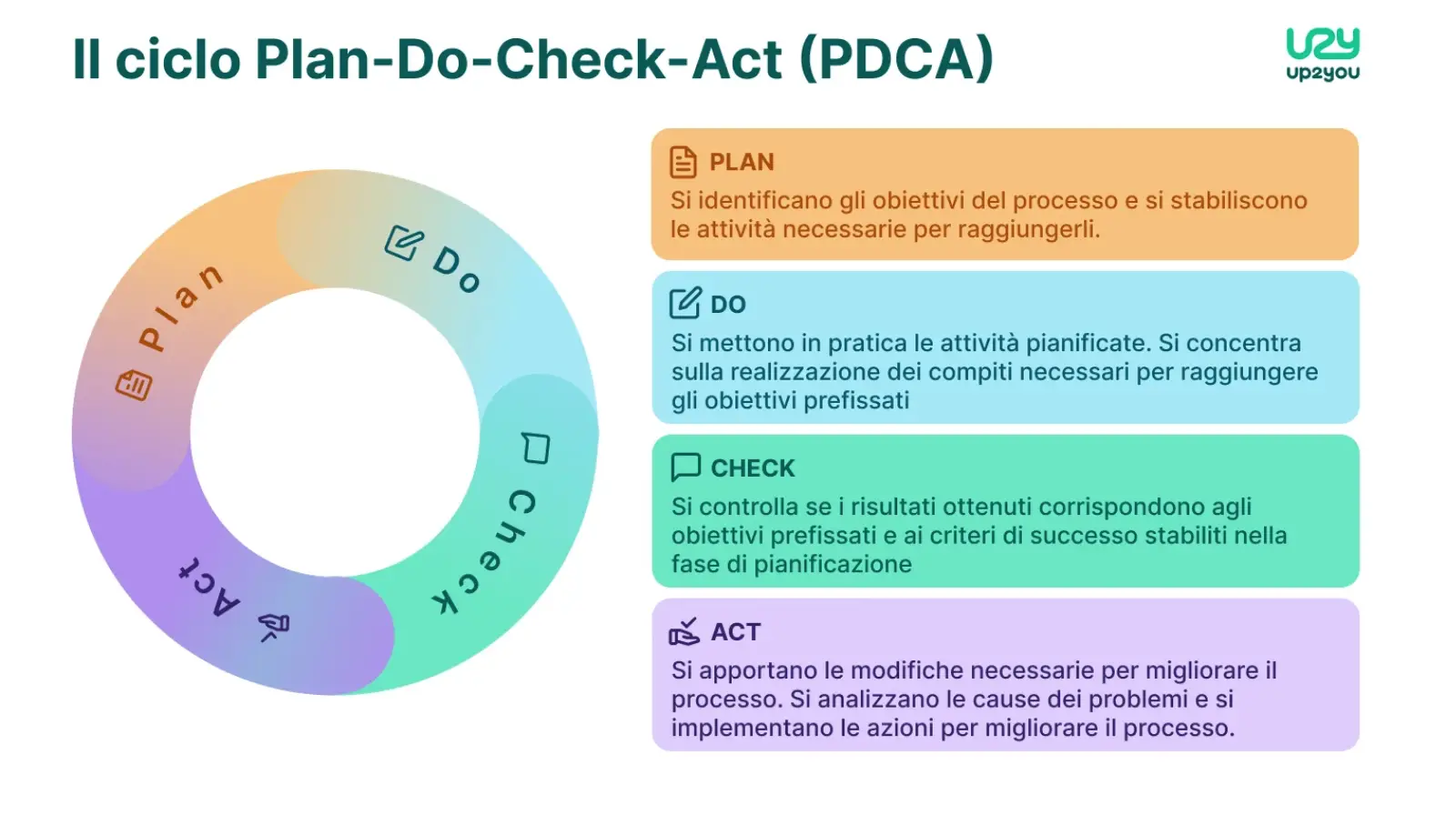
The beating heart of this standard is the PDCA (Plan-Do-Check-Act) cycle, a systematic approach that ensures that every activity is planned, executed, controlled and optimized.
In view of the future version 2026, this model will be further enhanced by Risk-based thinking, that is, the ability to predict risks and opportunities before they even occur.
Operationally, the system works through a series of closely interconnected phases and management requirements.
The use of this system involves mapping each activity, determining its sequence and interactions, and establishing certain control criteria. Only through this constant monitoring and data analysis it is possible to ensure that the organization not only keeps the promises made to the customer, but also succeeds in reduce waste and operating costsi in the long run.
What's new in ISO 9001:2026
The revision of ISO 9001 expected in 2026 does not overturn the quality system, but moves its center of gravity decisively.
Quality is no longer understood only as product compliance, but as the organization's ability to remain credible and resilient in a rapidly changing environment. The real turning point is that climate and sustainability they stop being 'implicit' factors and become explicit elements with which the Quality Management System (QMS) must deal directly. For those who want to maintain certification, the answer to the new challenges will not be to add a simple 'ESG chapter' to the documents. The standard will require demonstrate concretely that environmental, social and climatic dimensions enter the system: from reading the context to evaluating risks, to managing suppliers and improvement objectives.
In particular, the climate change is now being treated as a critical external factor that the organization must evaluate with respect to its business continuity and the requests of stakeholders.
The 6 operational implications of the new standard
To translate these innovations into practice, the company will have to face 6 key changes in its way of operating. Let's see what they are.
A new gap analysis
The analysis will no longer only concern quality processes and indicators, but also the use of resources and the sustainability factors that impact on reputation and the product. It will be necessary to map where sustainability changes requirements (materials, recyclability, regulatory constraints) and where it impacts on the robustness of the process (extreme weather events, volatility of energy costs).
Expanded stakeholder analysis
It is no longer enough to look only at customers and suppliers. External expectations now include ESG players such as finance, insurance, regulators and local communities. If these stakeholders ask for evidence, the management system must be able to produce it.
Ethical leadership and governance
Senior management is called upon to have direct responsibility for culture and ethics. ESG impacts are included in governance issues: during audits, management must respond to how quality choices generate or suffer environmental and social impacts.
Integrated risk management and supply chain
The central question becomes: can environmental and climate risks compromise the supply of compliant products? Operational management extends to the supply chain, introducing qualification criteria and ESG monitoring where relevant for continuity and credibility.
Quality and sustainability objectives
The norm pushes us to measure what really determines trust. Objectives such as the reduction of waste (quality) become simultaneously energy saving and CO reduction objectives2(sustainability).
New internal skills
The system will require digital skills for data governance and data reliability, together with specific sustainability skills to manage issues such as materiality and climate risks. Finally, a crucial aspect concerns the communication. Although ISO 9001:2026 does not necessarily require a reporting aligned with CSRD, the market pressure towards ESG data Sturdy it is now part of the context. To maintain certification, many companies will need to structure collection and control processes data consistent with the expectations of the stakeholders, since this will become a key element of trust and business continuity.
What turns out is interesting is that ISO 9001, apparently far from sustainability and decarbonization, is integrated with these issues. In an unstable market, being certified means ensuring continuity and reliability integrating sustainability requirements and risk management (climate, energy and supply) to respond to new real-world expectations.
What are the transition timelines
2026 will not represent a moment of sudden change, but the start of a phase of gradual transition. For ISO 9001:2026, the official publication is currently scheduled for September 2026.
However, it is essential to understand how this step will work so as not to be caught unprepared.
In line with international practice, after publication, a three-year transitional period. During this period of time, the certifications issued on the previous version (2015) rThey will remain valid, giving companies the time necessary to adapt.
Although the formal deadline may seem a long way off, certification bodies' expectations will change much sooner. Already fromFall 2026, auditors will begin to shift attention from the mere presence of documents to real traceability between context, risks, decisions and operational controls.
Many organizations will choose to Take action already during the surveillance audits at the end of 2026. The goal is not to chase formal updating, but to immediately strengthen the strength of its evidence (on issues such as climate, value chain and data integrity), preventing small gaps from turning into critical issues once the bar of market expectations has risen.
In summary, the 2026-2027 biennium It will be the strategic moment to work methodically on your management system, allowing a smooth passage to the new norm without the last-minute urgency.