Digital Product Passport (DPP)

Enhance your products and ensure regulatory compliance by tracking your supply chain.
Our 3-phase methodology
- Definition of personalized KPIs and operational action plan
- Training sessions on policies, procedures, and monitoring tools
- Assistance in preparing the necessary documentation
- Continuous support during the audit and in communicating the result
Output: A clear roadmap with the information requirements for your product category, a strategic action plan, and a compliance report with a short, medium, and long-term priority matrix.
Output: A gap analysis for your product category, customized surveys for key suppliers, and an operational action plan with responsibilities divided by company department and supplier.
Output: A product database compliant with EU requirements, featuring harmonized data and a unique data carrier applied to the product.
Simplify supply chain data collection with Network
Receive support from a dedicated team of consultants

What is the Digital Product Passport (DPP)?

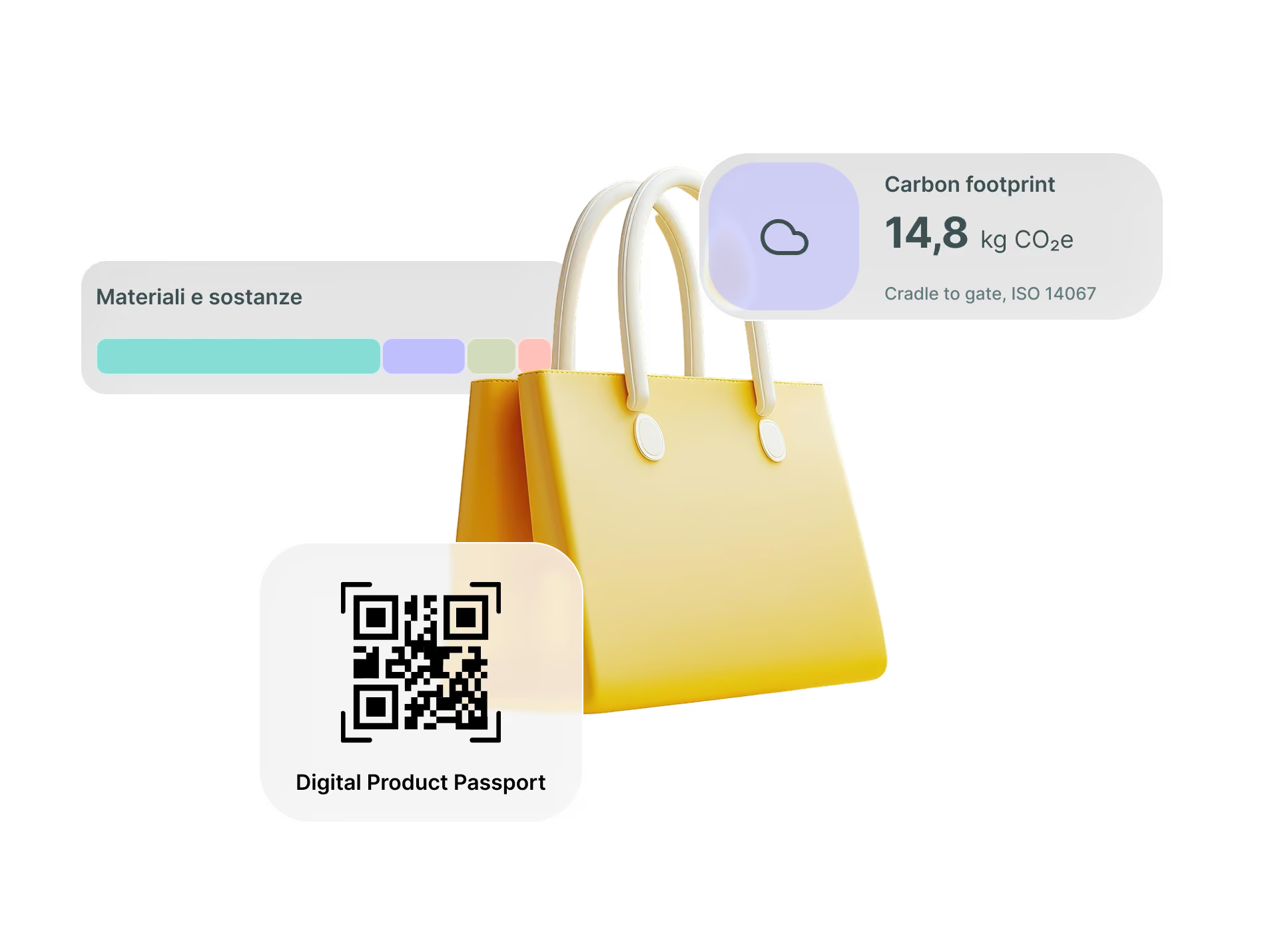
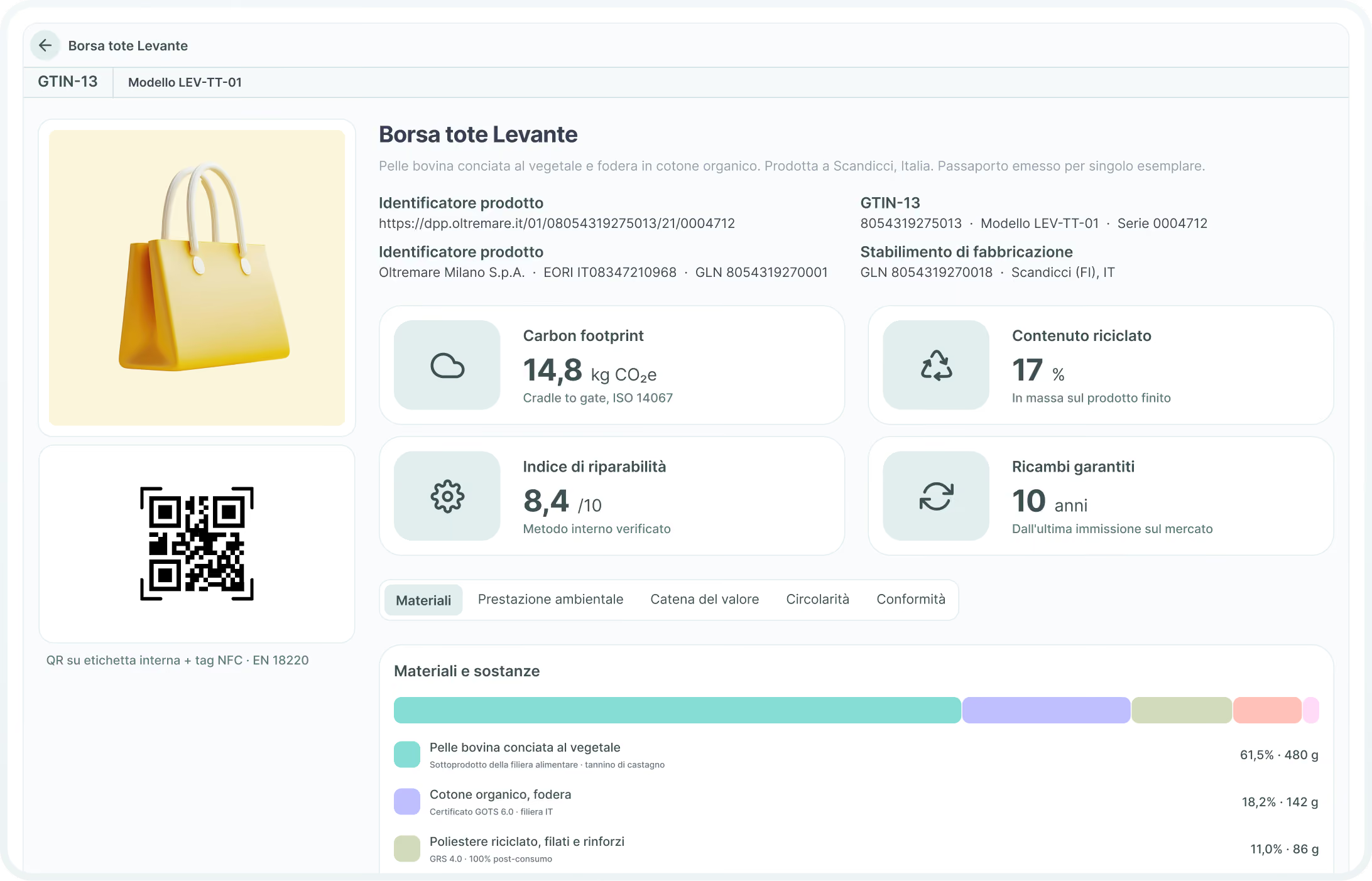
The Digital Product Passport (DPP) is a set of specific data related to a product, accessible electronically by scanning a data carrier, such as a QR code or a digital watermark. The passport contains digitized information about the product and its entire life cycle, allowing consumers, authorities, and partners to easily access transparent and verified information.
At what level of detail can the passport be structured?
Depending on the nature of the product, the complexity of the value chain, and its environmental impact, the DPP can be structured at the level of an individual item, a production batch, or an entire product model.
What internal actions can be taken to bridge identified information gaps?
For any missing information, we define the most appropriate internal action to bridge the gap: dedicated LCA analyses, obtaining missing product certifications, laboratory testing, integrating technical documentation, or targeted data collection along the supply chain using structured surveys.
How is the data carrier technology chosen?
We select the most suitable data carrier technology for the product (such as QR code, NFC, RFID, or digital watermark), considering multiple key factors such as the product's context of use, its durability over time, and company production constraints.
What are the priority product groups defined by the European Commission?
The European Commission has identified priority sectors and groups such as textiles, electronics, iron/steel, aluminum, and furniture. Specific information requirements must be mapped along the supply chain for each of these sectors.