Life Cycle Assessment (LCA)
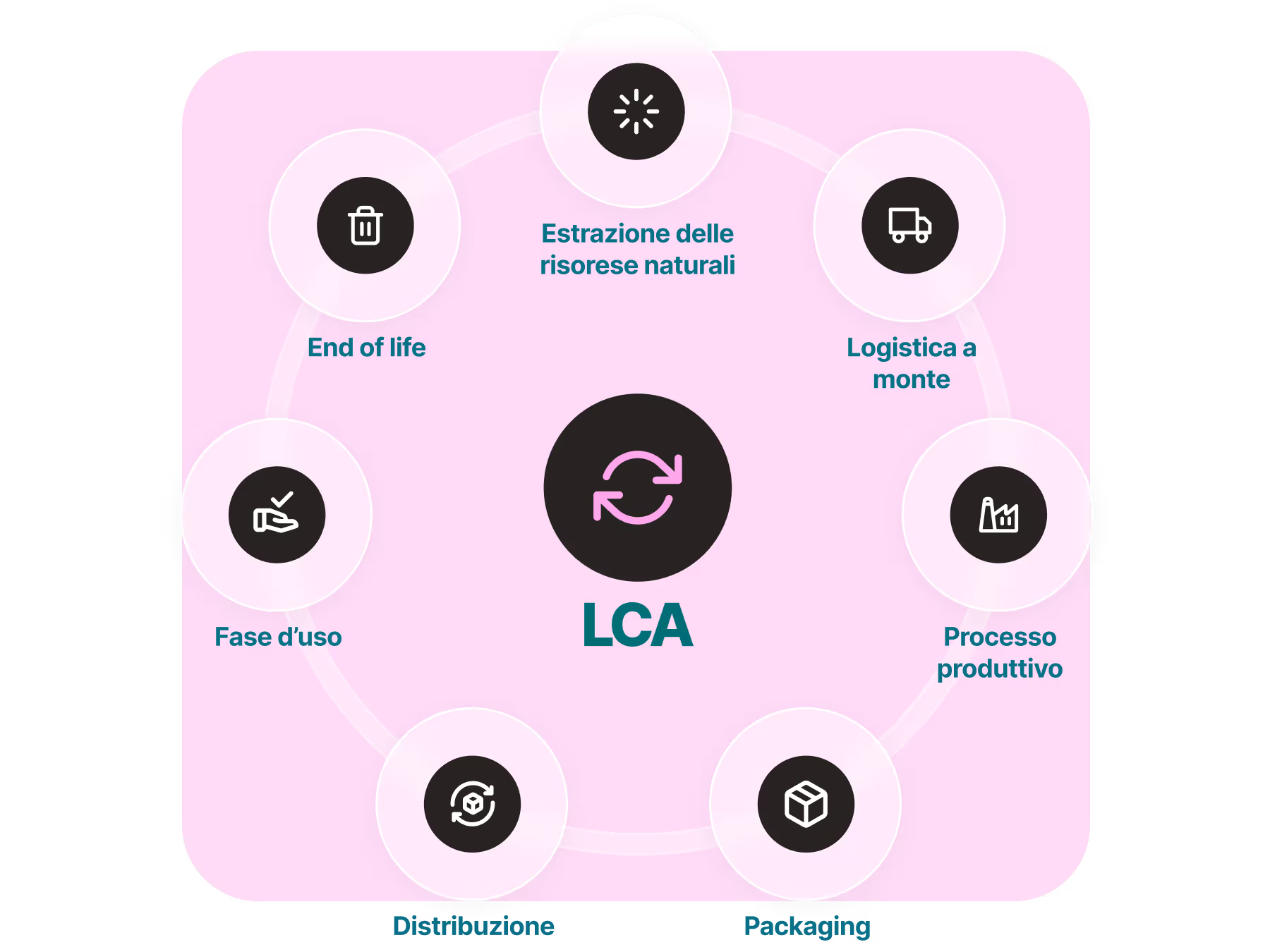
Why your company needs an LCA analysis
LCA is not just an environmental calculation; it is a diagnostic tool for identifying inefficiencies and turning data into market value.

Prioritize interventions
Identify exactly which phase holds the greatest impact to optimize your resources.

Eliminate the risk of greenwashing
Create robust and verifiable Green Claims that comply with European regulations.

Competitive advantage
Access tenders, qualify as a supplier, and earn credits for protocols such as LEED or BREEAM.

Regulatory foresight
Prepare for the future Digital Product Passport required by the EU.
Our 4-step methodology
We follow international ISO 14040 and 14044 standards to ensure maximum scientific accuracy.
Goal and scope definition
In this phase, we establish the study boundaries (System Boundaries) and define the Functional Unit.
What we measure: We determine the quantity of the reference product and its life cycle, such as "Cradle-to-Gate" (up to the factory exit) or "Cradle-to-Grave" (up to final disposal).
Quality standards: We set the data accuracy requirements and methodological assumptions necessary to begin the analysis.

Inventory Analysis (LCI)
We collect and process the flows of matter and energy entering and leaving the system.
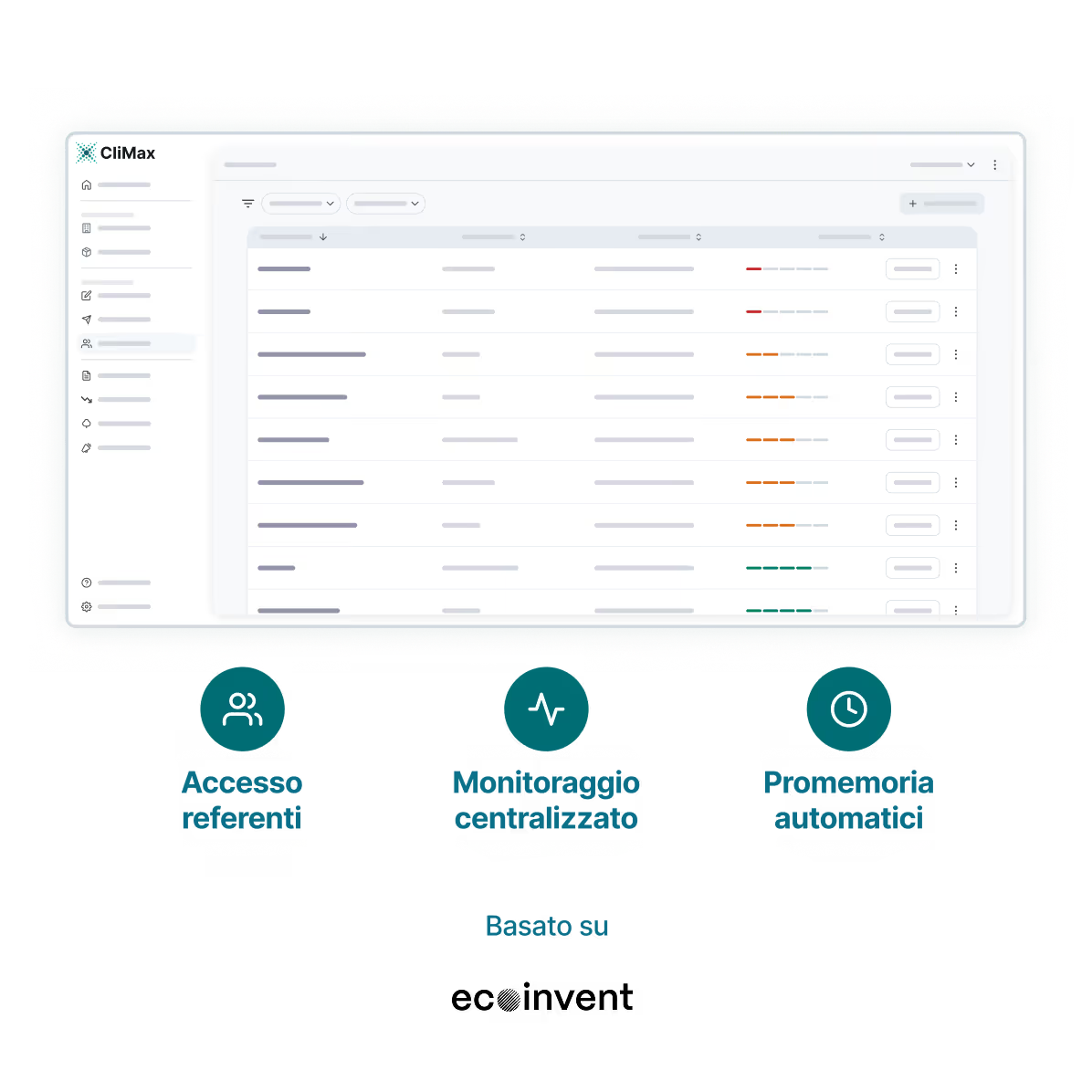
Efficient data collection: We use our CliMax platform to centralize primary company data, reducing management time by 71%.
Input and Output: We map every resource extracted (raw materials, energy) and every emission generated (to air, water, and soil) for each process unit.
Database integration: Where primary data is unavailable, we integrate secondary data from scientific databases such as Ecoinvent.
Impact Assessment (LCIA)
We translate the inventory into potential environmental damage using standardized scientific indicators.
Professional modeling: We use various methods, including the European Commission's EF 3.1, to calculate environmental footprints.
Key indicators: We don't stop at climate change (kg CO2 eq). We also analyze water use, acidification, eutrophication, and the consumption of fossil or mineral resources.


Interpretation and improvement strategies
We turn numbers into concrete business decisions.
Hotspot Identification: We identify the "critical points"—materials or processes that contribute most to the overall footprint—to determine where interventions will have the greatest impact.
Strategic outputs: We provide robust conclusions and recommendations that can be used for research and development (Eco-design) as well as for marketing and sustainability reporting.
The intelligent platform for LCA
Climax is the Up2You Platform module that lets you simplify complex environmental data using Up2You's automation and artificial intelligence.
Discover Climax

Automation and precision
Climax integration reduces information management time by an average of 71%, by automating the allocation of carbon footprint data to specific LCA studies.

Reliable and verifiable data
Beyond data protection, the platform allows you to trace the primary source of every piece of information, making the study ready for audits and ISO 14040/44 Critical Reviews.

Hotspot monitoring
Intuitive dashboards to map the value chain and identify environmental critical points throughout the entire life cycle, actively involving strategic partners.

Centralized repository
A shared digital space that ensures direct access for all project stakeholders, with automated reminders to facilitate activity tracking.
Get your EPD
LCA is the scientific basis for obtaining an EPD (Environmental Product Declaration), a third-party certified label that transparently communicates your product's environmental performance to customers and partners.
5-year validity
Compliance with Product Category Rules (PCR)
Certification by independent third parties


Reduce costs and impacts with Eco-design
LCA analysis transforms environmental data into a diagnostic tool to validate eco-design and optimize development costs.
Hotspot identification: pinpoint the materials or processes that contribute most to the total impact to focus investments where they truly matter.
What-If Analysis: simulate and compare alternative materials during the early design stages, reducing costs and accelerating research and development.
Scientific validation: select raw materials and suppliers based on objective and verifiable data, moving beyond simple estimates.
Circular economy: design products optimized for reuse and recycling, drastically reducing the extraction of virgin resources.



Get support
from a qualified team

Frequently Asked Questions
What is Life Cycle Assessment (LCA) and what is it used for in a company?

Life Cycle Assessment (LCA) is a standardized, data-driven methodology that measures the environmental impact of a product or service throughout its entire life cycle. It serves as a diagnostic tool to identify inefficiencies, guide eco-design, and prevent greenwashing through tangible scientific evidence.
What environmental indicators are measured in an LCA analysis?
In addition to climate change (kgCO2eq), a professional LCA analysis evaluates indicators such as:
- Water footprint: consumption and scarcity of freshwater.
- Acidification: release of substances that damage soil and water.
- Eutrophication: excess nutrients in terrestrial and aquatic ecosystems.
- Land use: impact on biodiversity and erosion.
- Human toxicity: potential health damage resulting from toxic substances.
What is the difference between Cradle-to-Gate and Cradle-to-Grave boundaries?
These terms define the boundaries of the LCA study:
- Cradle-to-Gate: analyzes the product from production until it leaves the factory.
- Cradle-to-Grave: also includes the use phase and final disposal in a landfill.
- Cradle-to-Cradle: extends the analysis to complete recycling to create circular production cycles.
Why is LCA fundamental for obtaining EPD certification?
LCA provides the essential scientific calculation basis for obtaining an EPD (Environmental Product Declaration). While the LCA is the internal technical study, the EPD is the Type III environmental label verified by a third party that allows for transparent and objective communication of environmental performance on the market.
In which sectors is an LCA study required to participate in tenders?
LCA analysis is a rewarding or mandatory requirement in several key sectors:
- Construction: to meet CAM (Minimum Environmental Criteria) and LEED or BREEAM protocols.
- Automotive: to calculate "Scope 3" and meet the decarbonization requirements of major manufacturers (OEMs).
- Fashion and Textiles: as a technical basis for the future Digital Product Passport.
- Agri-food: to obtain labels such as "Made Green in Italy".
How can you reduce data collection time for an LCA project?
Data collection can be optimized using the Climax module of the Up2You Platform, which guarantees an average reduction of 71% in management time. The system centralizes information, allows direct access to points of contact, and automates deadline reminders, ensuring full traceability of primary sources.
Turn LCA analysis into market value
Obtain internationally recognized EPD certifications and protect your brand from the risk of greenwashing with verifiable data.
Contact us